
Editor’s Note: This post was written as a preview of an upcoming Supreme Court of Canada decision for the Fantasy Courts website and newsletter.
🏁 Welcome back for the start of season 13 of Fantasy Courts! I hope everyone had a great summer. The Supreme Court of Canada had an active July, releasing five criminal judgments and one private international law decision. Since then, it’s been quiet, but that’s about to end with the decision in Kosicki v. Toronto due out Friday, Sept. 19. At issue is whether private landowners can gain title over municipal parkland through adverse possession.
🔮 Head over to Fantasy Courts to lock in your predictions for this week’s decision, or read more about the case below. A recap of the decisions we missed this summer follows.
Case to Predict: Adverse Possession of Municipal Parkland
Appeal by leave from Kosicki v. Toronto (City), 2023 ONCA 450
What Happened?
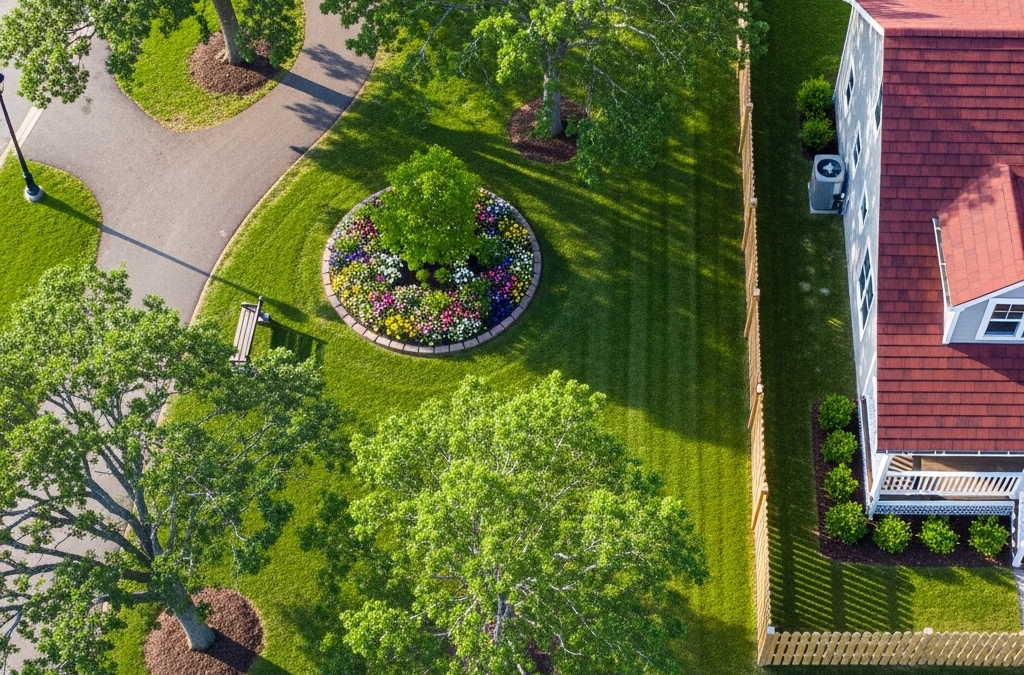
The appellants are owners of a residential property in Toronto. They sought an order for adverse possession of a parcel of City parkland that the previous owners of their property had fenced off with a chain-link fence and enclosed within their backyard. Toronto acknowledged that the appellants’ evidence satisfied the traditional test for adverse possession. The issue was whether the disputed land was nevertheless immune to a claim for adverse possession by virtue of being city land.
The application judge found that a private landowner could not acquire title by encroaching on public land and fencing off portions for their private use. The Court of Appeal agreed and dismissed the appeal. Brown J.A. wrote lengthy dissenting reasons.
What Was Argued at the SCC?
Appellants: The appellants framed the case as whether the courts can create an exemption for municipal parkland from claims of adverse possession or whether the provincial legislation, Real Property Limitations Act, ought to prevail here. They argued the courts below made a public policy decision and encroached on what should be a decision left to the legislature. The common law should not be used to amend a competently enacted, comprehensive statutory scheme.
Respondent: The respondent took a common-sense approach, framing the issue simply as whether a property owner can erect a fence on municipal parkland, deprive public access, and then acquire title through adverse possession. The Real Property Limitations Act doesn’t actually refer to adverse possession and is not a complete code, but instead depends on the operation of the common law.
What Else Should You Know Before Making a Prediction?
Justice Jamal at the outset pointed out that there has never been a clear successful adverse possession claim against a municipality in Ontario, and suggests this signals the state of the law. If other justices are of the same mind, then the appellants will have a difficult time. I’m leaning towards appeal dismissed on this one and the Court embracing the more common-sense approach proposed by the respondents.
Summer Recap
Here’s what we missed in July:
R. v. Varennes, 2025 SCC 22 (released July 11, 2025)
- A trial judge can order a judge-alone trial even when the Crown refuses consent, if necessary to protect the accused’s right to be tried within a reasonable time.
- The Crown’s refusal is reviewable by a superior court and on a standard lower than abuse of process.
R. v. I.M., 2025 SCC 23 (released July 18, 2025)
- Under the Youth Criminal Justice Act, the Crown must rebut the presumption of diminished moral blameworthiness beyond a reasonable doubt if seeking an adult sentence.
- The focus must be on developmental age and moral capacity, not on the seriousness or objective gravity of the offence.
R. v. S.B., 2025 SCC 24 (July 18, 2025)
- To impose an adult sentence under the YCJA, the Crown must prove the youth had adult-like maturity at the time of the offence and that an adult sentence was necessary.
- Social-context evidence is relevant to both diminished moral blameworthiness and what length of sentence ensures accountability.
R. v. Kloubakov, 2025 SCC 25 (July 24, 2025)
- Criminal Code offences on “material benefit” and “procuring” in sex work do not violate section 7, as they allow the safety measures recognized in Bedford.
- The law distinguishes between exploitative and non-exploitative activities, and only the former are criminalized.
R. v. Bharwani, 2025 SCC 26 (July 25, 2025)
- A trial judge’s finding of fitness to stand trial is owed deference and overturning requires new evidence with a real possibility of changing the outcome.
- Fitness includes understanding proceedings and communicating decisions grounded in reality, even if symptoms affect the ability to act in one’s best interests.
Sinclair v. Venezia Turismo, 2025 SCC 27 (July 31, 2025)
- Ontario courts lack jurisdiction over foreign companies for injuries abroad when there is no real and substantial connection to Ontario.
- The “real and substantial connection” test is reaffirmed as a limit on jurisdictional overreach.
Thanks for reading and playing Fantasy Courts. If you liked today’s newsletter, we’d love for you to share it with a friend, or you can sign up to receive it as an email: https://mailchi.mp/37b20ffd0198/fantasycourts
-Tom Slade