
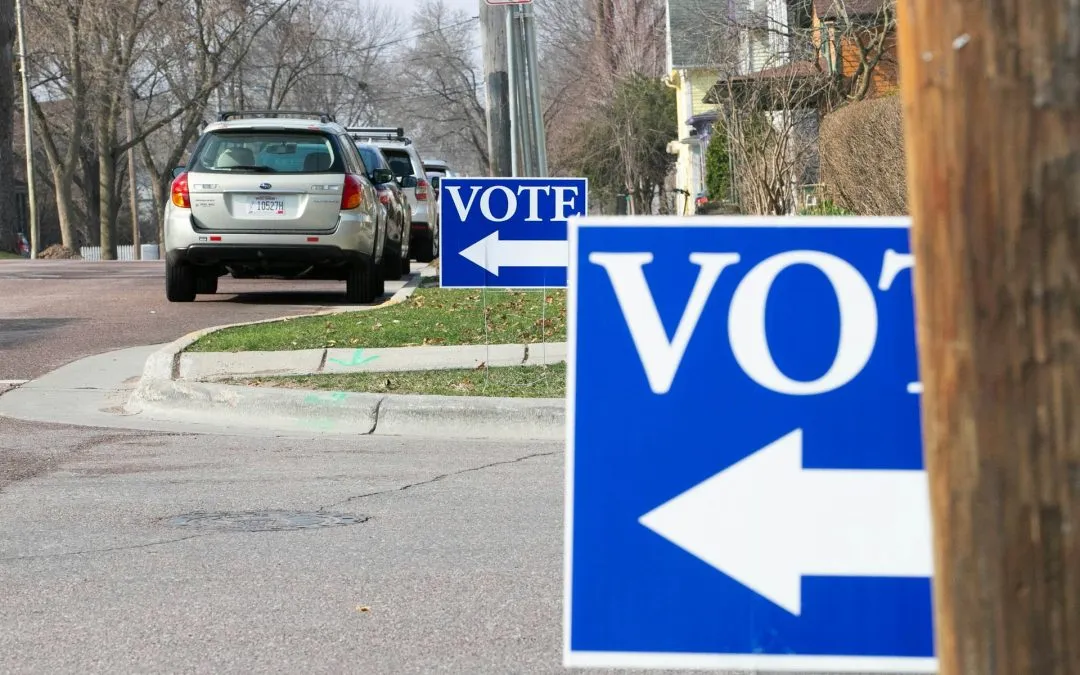
Editor’s Note: This post was written as a preview of an upcoming Supreme Court of Canada decision for the Fantasy Courts website and newsletter. Photo by Mark Riechers on Unsplash.
🗳️ On Friday, June 19, 2026, the Supreme Court of Canada will release its decision in Glen L. Resler, in his capacity as Chief Electoral Officer v. Joseph V. Anglin. At issue is whether an unsuccessful election candidate can bring a private action against an election officer for damages for the loss of the chance to be elected.
🎯 On June 12, 2026, the SCC released its decision in Société de l’Acadie du Nouveau-Brunswick v. Canada (Prime Minister), 2026 SCC 22. In a 6:3 decision, the Court allowed the appeal, holding that New Brunswick’s constitutional language rights require the province’s Lieutenant Governor to be able to understand, communicate in, and perform their functions in both official languages.
🤖 32% of Fantasy Courts players correctly predicted the result! The SCCbot got it wrong.
🔮 Head over to Fantasy Courts to lock in your predictions for this week’s decision. Scroll down for details on this week’s case and a recap of last week’s judgment.
Case to Predict: Can a Losing Candidate Sue Over a Lost Chance to Win?
Appeal by leave from Anglin v. Resler, 2024 ABCA 113
What Happened?
Joseph Anglin was an Alberta MLA from 2012 to 2015. He ran for re-election as an independent candidate in the 2015 provincial election and lost.
During the campaign, Alberta’s Chief Electoral Officer, Glen Resler, received complaints about Mr. Anglin’s election signs. The dispute involved Mr. Anglin’s use of “MLA” on his signs and the size of the required sponsorship information. The Chief Electoral Officer removed at least 25 signs. Mr. Anglin alleges that all of his signs were removed or destroyed, possibly by third parties acting on Mr. Resler’s direction.
After the election, Mr. Anglin did not challenge the election result through Alberta’s controverted election process. Instead, he sued Mr. Resler and others, alleging that Mr. Resler’s conduct during and after the election denied him a fair chance at re-election. He claimed damages for the loss of that chance, along with general and punitive damages.
The chambers judge struck the claim, finding it was effectively an attempt to bypass the controverted election process. The Alberta Court of Appeal allowed the appeal in part, reinstating the claim other than the malicious prosecution allegations. It held that Mr. Anglin was not trying to undo the election result. Rather, his claim was premised on the result being final.
What Was Argued at the SCC?
Appellant: The Chief Electoral Officer argues that the controverted election process is the exclusive way to ask a court to inquire into the fairness or validity of an election. Mr. Anglin chose not to use that process. He cannot, the appellant says, reframe an election challenge as a damages claim for “loss of chance” without undermining certainty and finality in elections. The appellant also argues that an elected office is held for public service, not private profit, and that a losing candidate has no private entitlement to damages for not being elected.
Respondent: Mr. Anglin says this case is not about setting aside the 2015 election or questioning the legitimacy of the winning candidate. He accepts that the election is final. His claim, he says, is about alleged misfeasance in public office, Charter rights, and the basic principle that rights require remedies. On his view, a damages claim for lost chance does not undo the election, but simply compensates him for the opportunity he says he lost because of wrongful conduct by a public official.
What Else Should You Know Before Making a Prediction?
I’d be surprised if the Court closes the door completely, but at the same time, they will be reluctant to encourage election-related civil claims. While granting leave to appeal doesn’t mean an appeal is more likely to be allowed, in this situation I can see it being a situation where the Court wants to set the law straight and also fix an error. I’m leaning toward appeal allowed.
SCCbot
This season, we’re also asking the SCCbot, an AI tool that predicts Supreme Court of Canada decisions, what it thinks the Court will do. This week, the SCCbot predicts the appeal will be dismissed (with ~60% confidence). It expects the Court to hold that the Election Act‘s controverted-election process governs challenges to an election’s validity but is not the only remedy for everything arising out of a campaign — letting Joseph Anglin’s claim that the Chief Electoral Officer acted in bad faith proceed as a misfeasance-in-public-office action for damages. The likely anchor is TeleZone: a damages claim premised on the finality of a result is not a disguised attack on it, reinforced by the high bar to strike a claim and by s. 5.1’s “good faith” immunity, which leaves bad-faith conduct exposed.
But watch for the Court confining the election regime to genuine seating challenges and doubting whether “loss of the chance to hold office” is even a compensable injury — so a split, or a win trimmed on damages, is well within range. Anglin’s biggest soft spot is the “two winners” problem: the awkwardness of compensating a candidate for an election he concedes he lawfully lost — a concern sharpened by an unusually heavy intervener lineup, two Attorneys General and two electoral officers, warning against exposing election administrators to lawsuits. SCCbot is now 9 for 14 in its predictions.
Previous Case Recap: Société de l’Acadie du Nouveau-Brunswick
Société de l’Acadie du Nouveau-Brunswick v. Canada (Prime Minister), 2026 SCC 22
Held (6:3): Appeal allowed. The appointment of a Lieutenant Governor of New Brunswick who cannot understand, communicate in, and perform their functions in both official languages infringes s. 16(2) of the Charter.
Key points:
- New Brunswick is Canada’s only officially bilingual province, and its constitutional language guarantees protect substantive equality between English and French.
- The majority held that s. 16(2), read in light of s. 16.1, includes both functional and symbolic dimensions of language equality.
- Institutional bilingualism does not usually require every office holder to be personally bilingual. But the Lieutenant Governor is a unipersonal and highly symbolic constitutional institution, so the office holder’s personal ability to function in both official languages matters.
- The Court issued a declaration rather than quashing the appointment.
- The dissent would have dismissed the appeal. It said the Charter protects institutional bilingualism, not personal bilingualism, and that imposing a personal bilingualism requirement would effectively amend the Constitution through interpretation.
📊 32% of Fantasy Courts players predicted correctly. The SCCbot got it wrong.
Thanks for reading and playing Fantasy Courts. If you liked today’s newsletter, we’d love for you to share it with a friend, or you can sign up to receive it as an email: https://mailchi.mp/37b20ffd0198/fantasycourts
-Tom Slade