
Case: Nigro v. Luciano, 2026 ONCA 283 (CanLII)
Keywords: dog bite; “booties”; Dog Owners’ Liability Act, R.S.O. 1990, c. D.16
Synopsis:
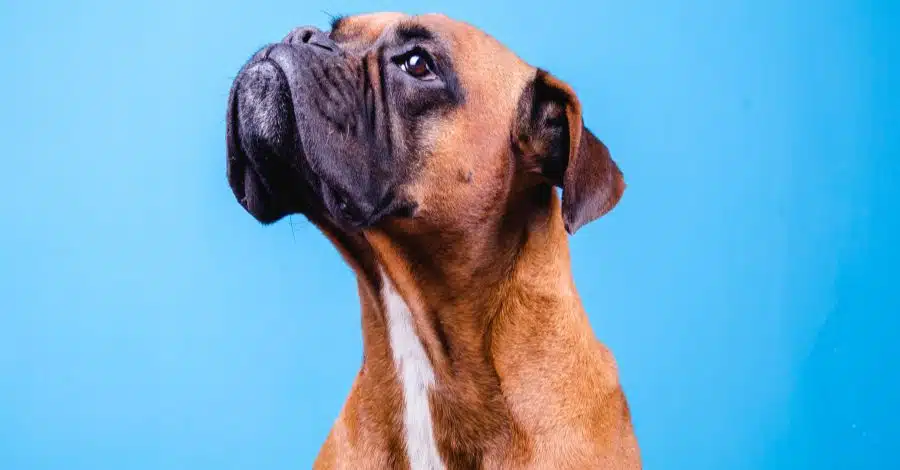
The Appellant is the Respondents’ part-time dog walker. One of the dogs, a large male boxer called “Forrest Gump”, develops an infection in his foot; the veterinarian recommends he wear “rubber booties” when walking in wet areas. (See paras. 3, 5-6). While watching the dogs at the Respondents’ residence, the Appellant decides to put the “booties” on Forrest before exiting the house. The dog lunges, bites her left arm and starts shaking; after getting loose, the dog continues to bite the Appellant on various parts of her body. (See para. 9). Thereafter, the Appellant brings an action against the Respondents (i.e., on the basis that they are strictly liable as “owners” of the dog under the Ontario Dog Owners’ Liability Act, R.S.O. 1990, c. D.16), claiming general damages in the amount of $350K and special damages in the amount of $650K, for a total of $1M. (See para. 11).
The Motion Judge (Christie J.), grants summary judgment in favour of the Respondents, finding that since the dog walker also meets the definition of “owner” in the Dog Owners’ Liability Act she is, jointly and severally liable for the damages. (See para. 1). The Court of Appeal (Gillese, Madsen, and Pomerance JJ.A.) dismisses the appeal. (See para. 2).
Importance:
As noted by the Court of Appeal, this appeal turns on the definition of “owner” in the Dog Owners’ Liability Act; the Court proceeded on a standard of correctness. (See paras. 1, 16).
The Dog Owners’ Liability Act defines “owner” at s. 1(1):
“owner”, when used in relation to a dog, includes a person who possesses or harbours the dog and, where the owner is a minor, the person responsible for the custody of the minor. (See para. 17).
Sections 2(2) and 2(3) say that “[w]here there is more than one owner…they are jointly and severally liable” regardless of “fault or negligence”. (See para. 18).
Citing Wilk v. Arbour, 2017 ONCA 21 (CanLII), the Motion Judge determined that “a person who is in physical possession and control over a dog just before it bites or attacks another person or animal” is a person who “possesses” that dog. As a consequence, they are an “owner” within the meaning of the Dog Owners’ Liability Act. (See para. 13). The Court of Appeal endorsed this interpretation of the Act, adding that those who “possess” or “harbour” a dog have “the ability to exercise control over the dog”, reflecting a deliberate Legislative choice (i.e., “to impose liability on those persons who are best placed to control the dog and prevent damage to persons and other animals”). (See para. 19).
The Court of Appeal also clarified that liability is not governed by the location of the incident – for example, it made no difference that the incident occurred at the Respondents’ home. (See para. 20). More specifically, the Court noted that s. 3(1) of the Dog Owners’ Liability Act “expressly ousts the application of the Occupiers’ Liability Act, in relation to the liability of the owner, when the dog bite occurs on the premises of the owner”. (See para. 18, 21). According to the Court, this is because the Dog Owners’ Liability Act,
- “seeks to promote responsibility and accountability in those who are best able to prevent dog bites and attacks, wherever they occur”; and
- “if someone meeting the definition of owner could escape liability merely because they were in someone else’s home” this would “defeat” the Legislature’s objective. (See para. 21).
The Court of Appeal similarly found it to be of “no legal significance” that the Appellant was “passively” carrying out instructions provided by the Respondents. For the Court, the person in possession of the dog is best placed to assess when and how instructions are to be carried out. (See para. 22). Finally, the Court of Appeal affirmed its prior determination in Wilk that liability is not based on who has “the highest level of authority over the dog”. There is no requirement that the ‘possessor’ be the only owner of the dog or, indeed, that they are acting exclusively of their own volition. (See para. 23).
In this particular case, the Court of Appeal determined that the Appellant was an “owner” of the dog for the purpose of the Dog Owners’ Liability Act. (See para. 24). However, the Court also found that, going forward, the question of whether a person is/is not an “owner” will be a matter of fact and context. Consistent with Wilk at para. 36, the Court indicated that a “rigid definition is to be avoided” and that “cases are best addressed if and when they come before the court for consideration”. (See para. 25).
Last, the court (both of them) kindly omitted mentioning that the name of the plaintiff/appellant counsel being Katz.
Counsel for the Appellant: Shane Katz (Singer Kwinter, Toronto)
Counsel for the Respondents: Erica Lewin (Intact, Toronto)