
Case: Conley v. Calgary (City), 2026 ABCA 105 (CanLII)
Keywords: townhouse; Calgary Subdivision Development Appeal Board; s. 688(3) of the Municipal Government Act, RSA 2000, c M-26
Synopsis:
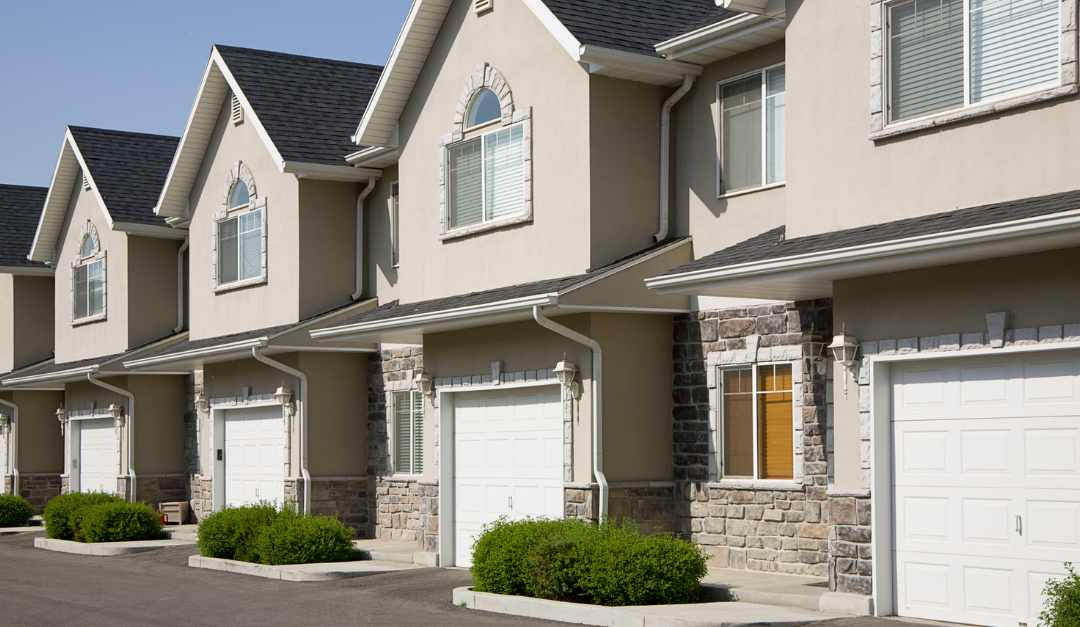
The Respondent City of Calgary approves a development permit for a townhouse. The development is located in a “Residential – Grade-Oriented Infill” district and classified as a “discretionary use” under the City of Calgary Land Use Bylaw IP2007. (See para. 2). The Applicants,[1] who own nearby property, appeal the City’s decision to approve the development permit to the Calgary Subdivision Development Appeal Board. The Board allows the Applicants’ appeal in part (i.e., upholding the permit, but adding a requirement to submit revised plans to reduce the impact of the development). (See para. 3). The Applicants next seek permission to appeal the Board’s decision to the Court of Appeal; the Court per Friesen J.A. grants “permission to appeal” on grounds that the Board erred in law or jurisdiction and failed to provide adequate reasons for its decision. (See paras. 4-5).
Importance:
Section 688(3) of the Municipal Government Act, RSA 2000, c M-26 provides that, on hearing an application for permission to appeal, “the judge may grant permission…if the judge is of the opinion that the appeal involves a question of law of sufficient importance to merit a further appeal and has a reasonable chance of success.” The Court of Appeal referred to two recent examples: Augustana Neighbourhood Association v. Camrose (Subdivision and Development Appeal Board), 2021 ABCA 427 and Biernacki v. Alberta (Land and Property Rights Tribunal), 2022 ABCA 56. (See para. 6).
Regarding the Applicants’ first ground of appeal, the Court of Appeal was satisfied that the interpretation of the words “townhouse” and “secondary suite” in the Bylaw raises a question of law, that it stood a reasonable prospect of success, and that a determination on the interpretative issue impacts “the parties to the dispute, their neighbours, the rest of the community subject to the zoning bylaw, and other communities that have similar zoning bylaws”. By citing Edmonton (City) v. Edmonton (Subdivision and Development Appeal Board), 2016 ABCA 129 (CanLII), at paras. 46-50, which the Court of Appeal calls “Grewal”, it would appear that the Court is here saying that the issue is of sufficient importance (i.e., the third criteria in s. 688(3)). (See para. 18).
As described by the Court of Appeal at para. 7, the Applicants’ issue is whether the Bylaw allows townhouses to have secondary suites; and whether the proposed development is really a “multi-residential development – minor” which would have implications for Board jurisdiction in ss. 687(3)(a.3) and (d) of the Municipal Government Act. (See para. 7). The Applicants also take issue with the “sparse, conclusory reasons” offered by the Board to justify its interpretation of the Bylaw. (See para. 8).
Regarding the Applicants’ second ground of appeal, the Court of Appeal observed that “sufficiency of reasons will rarely be considered a question of law of sufficient importance to warrant appellate review”. (See para. 20). The Court cited Stubicar v. Calgary (Subdivision and Development Appeal Board), 2022 ABCA 299 at para. 62 as authority for this proposition. For the purpose of this brief overview, we have considered this para. from Stubicar independently, and would highlight the following key points:
[1] Note: at paras. 18 and 20, the Court of Appeal uses the singular form (i.e., “applicant’s”) to describe Arden Conley, David Baker, and Travis Brown. Elsewhere, they are described using the plural form as the “applicants”.
- reasons which are “skeletal” or “conclusory” may be inadequate;
- reasons should not be assessed in isolation, but considered in the context of the parties’ representations, the nature of the issues, and the record;
- one must consider whether “a reasonably intelligent reader”, after reviewing the Board’s decision and the record before the Board, could understand why the Board decided what it did; and
- because the analysis is contextual, sufficiency of reasons is “not a standalone ground of appeal”.
In this case, the Court of Appeal also noted that “conclusory reasons that fail to disclose a reasonable basis for the Board’s conclusion may ground appellate intervention”. In the circumstances here, the Court found that the Applicants’ sufficiency of reasons argument was “intertwined” with the primary interpretative issue and that, as in the case of Zhuromsky v. Calgary (City), 2025 ABCA 106 at para. 11, the Applicants were entitled to rely on these arguments on appeal. (See para. 20).
It remains to be seen what the Court of Appeal will determine regarding the interpretation of the Bylaw, with potential implications for those seeking to add “secondary suites” to townhouses in the City of Calgary – and elsewhere in Alberta, depending on the relevant bylaw.
Counsel for the Applicants: Janice Agrios, K.C. (Kennedy Agrios Oshry LLP, Edmonton)
Counsel for the Respondent, The City of Calgary: Nicole Maynard (City of Calgary Municipal Corporation, Calgary)
Counsel for the Respondent, Calgary Subdivision and Development Appeal Board: Jennifer Sykes (Caron & Partners LLP, Calgary)
Counsel for the Respondent, MD Rawshanul Huq Saikat: Kathleen Elhatton-Lake (Lake Law, Edmonton)