
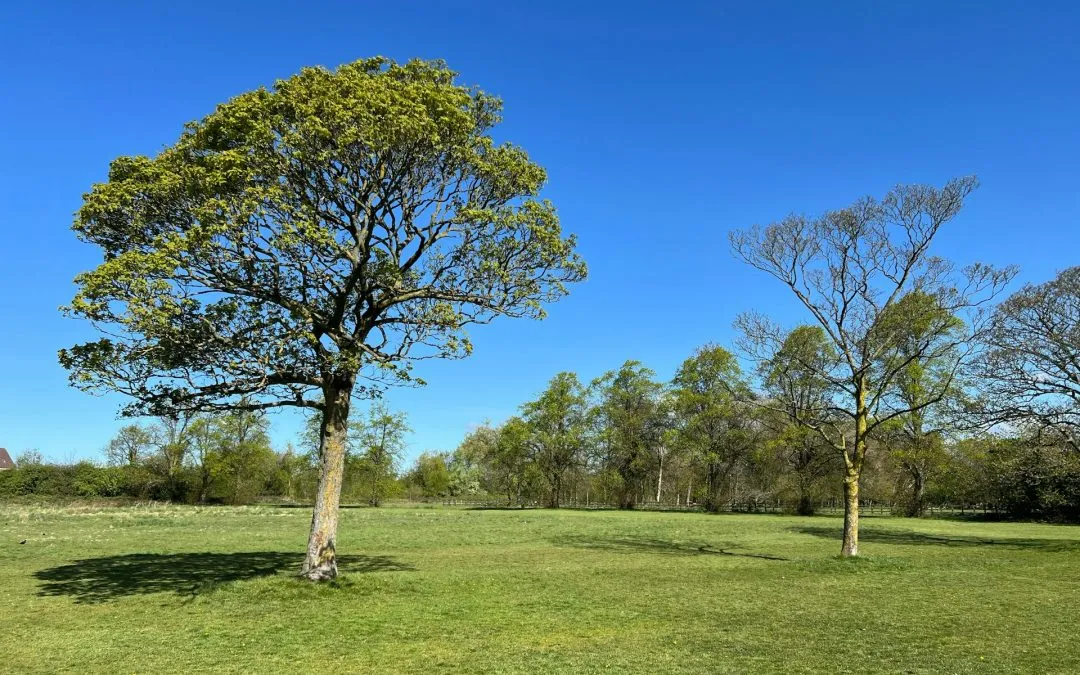
Editor’s Note: This post was written as a preview of an upcoming Supreme Court of Canada decision for the Fantasy Courts website and newsletter. Photo by JOGsplash on Unsplash
🌳 On Friday, the Supreme Court of Canada will release its decision in Ville de Sainte-Julie v. Investissements Laroda inc. The case asks when (if ever) a municipality must pay money when a developer has transferred it excess parkland and the parties’ deal contemplated future compensation in kind.
🎯 On December 12, 2025, the SCC released R. v. Carignan, 2025 SCC 43. In a unanimous (9:0) decision, the Court dismissed the appeal, confirming that non-compliance with s. 495(2) of the Criminal Code can render an arrest unlawful (and potentially arbitrary under s. 9 of the Charter), and that s. 495(3) does not bar an accused from raising that issue in their own criminal proceeding.
📊 82% of Fantasy Courts players predicted correctly!
🔮 Head over to Fantasy Courts to lock in your predictions for this week’s decision. Scroll down for details on this week’s case or a recap of last week’s judgment.
Case to Predict: When Does a Municipality Have to Pay for “Banked” Parkland?
Appeal by leave from Investissements Laroda inc. c. Ville de Sainte-Julie, 2023 QCCA 1294
SCC webcast 🎥 (factums not available)
What Happened?
A developer transferred land to Ville de Sainte-Julie to satisfy parkland requirements. It turned out the developer had transferred more land than required, and the parties entered into an agreement in 2001 creating a kind of land “bank”. Instead of the City paying cash for the excess, the bank could be used later to offset fees tied to future developments.
Years later, related entities tried unsuccessfully to get certain lots removed from an agricultural zone so they could be developed. Eventually, Laroda (successor to the original developer’s rights) demanded that the City make a monetary offer for the banked land. Talks broke down, and Laroda filed a claim.
The Superior Court dismissed Laroda’s claim. The Quebec Court of Appeal allowed the appeal and ordered the City to pay.
What Was Argued at the SCC?
Appellant: The City argues the 2001 agreement was a transaction that should be understood as having a novatory (or at least declaratory) effect on the parties’ prior obligations. (Novation is a legal mechanism that extinguishes an existing obligation by substituting it with a new one.) It says the Court of Appeal erred by effectively converting a bargained-for compensation mechanism into a present-day obligation to pay money.
Respondent: Laroda’s position is that the agreement recognized an existing “excess” and created an obligation whose performance was deferred (not contingent on a true condition). On that view, where the contemplated in-kind mechanism has become impossible, the City must perform by equivalence, and Laroda says the Court of Appeal was right to order payment and to address timing and valuation through the Civil Code framework.
What Else Should You Know Before Making a Prediction?
This is a Civil Code-heavy appeal. A practical way to think about it: is this a case about enforcing a development risk bargain such that if no development happens, no cash changes hands, or about ensuring the municipality does not retain a net over-transfer without ultimately restoring value in some form? I’m leaning towards the latter and going with appeal dismissed.
Previous Case Recap: R. v. Carignan
R. v. Carignan, 2025 SCC 43
Held (9:0): Appeal dismissed.
Key points:
- Section 495(2) is mandatory: failing to comply with it can make an arrest unlawful, which can ground a s. 9 Charter claim.
- Section 495(3) is not a shield against Charter litigation by the accused. Its presumption operates in proceedings aimed at police officer liability, not to block an accused from challenging their arrest in their own trial.
- The trial judge’s refusal to hold a voir dire on lawfulness was a reviewable error and warranted a new trial.
- This decision is a great example of the Court’s approach to statutory interpretation that makes the text the “anchor of the interpretative exercise”.
📊 82% of Fantasy Courts players correctly predicted the outcome.
Thanks for reading and playing Fantasy Courts. If you liked today’s newsletter, we’d love for you to share it with a friend, or you can sign up to receive it as an email: https://mailchi.mp/37b20ffd0198/fantasycourts
-Tom Slade