
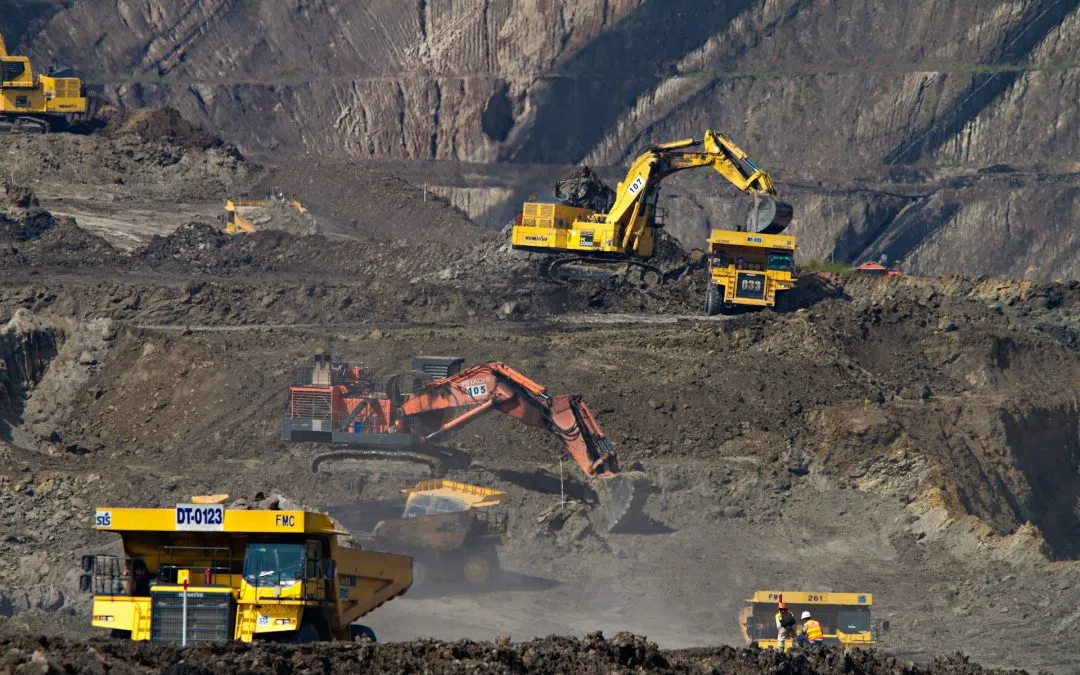
Editor’s Note: This post was written as a preview of an upcoming Supreme Court of Canada decision for the Fantasy Courts website and newsletter. Photo by Dominik Vanyi on Unsplash.
⛏️ On Friday, November 28, the Supreme Court of Canada will release its decision in Lundin Mining Corporation v. Markowich, a securities class action about whether a rockslide at a Chilean copper mine was a “material change” that Lundin had to disclose right away.
🎲 Last week, the SCC released Dorsey v. Canada (Attorney General), 2025 SCC 38, holding that inmates can use habeas corpus to challenge a refusal to transfer them to a lower-security prison. The Court was split 6:3. Only 15% of Fantasy Courts players correctly predicted the result.
🔮 Head over to Fantasy Courts to lock in your predictions for this week’s decision. Scroll down for details on this week’s case or a recap of last week’s judgment.
Case to Predict: Lundin Mining v. Markowich
Appeal by leave from Markowich v. Lundin Mining Corporation, 2023 ONCA 359
What Happened?
Dov Markowich alleges Lundin failed to disclose two events at its Candelaria mine: pit wall instability on October 25, 2017, and a rockslide on October 31. Lundin waited until November 29 to reveal them in a scheduled news release, after which the share price dropped 16% on the TSX. Markowich sought leave under the Securities Act to bring a statutory cause of action against Lundin for failure to disclose. He also sought certification of a class action.
The motion judge dismissed both motions. He found no “change in the business, operations or capital,” viewing the events as routine mining risks. The Ontario Court of Appeal reversed, holding the judge interpreted “change” far too narrowly and that Markowich had met the low threshold for leave.
What Was Argued at the SCC?
Appellant: Lundin says “material change” requires a fundamental shift in business, operations, or capital — not ordinary operational incidents. It warns that the Court of Appeal’s approach collapses the distinction between “material fact” and “material change” and forces “running commentary” disclosure.
Respondent: Markowich argues the statute is remedial and “change” must be interpreted broadly. He says the instability and rockslide altered the mine plan, required resequencing, and were followed by a major market reaction. This was enough to meet the leave threshold.
What Else Should You Know Before Making a Prediction?
This case will shape how easy or hard it is for investors to bring secondary-market claims. We can expect the Court to clarify what constitutes a “plausible interpretation” needed for granting leave. The SCC addressed similar issues under the equivalent Quebec statute in Theratechnologies Inc. v. 121851 Canada Inc., 2015 SCC 18. In Theratechnologies, the Court adopted a high standard for material change that can trigger disclosure obligations. One wrinkle in the present case is that the Securities Commission itself endorsed a lower threshold for getting leave.
Previous Case Recap: Dorsey v. Canada
Dorsey v. Canada (Attorney General), 2025 SCC 38
Held (6:3): Appeal allowed.
- Prisoners can use habeas corpus to challenge refusals to transfer them to lower-security institutions.
- The majority said such refusals reduce an inmate’s residual liberty and fit squarely within habeas corpus review.
- An inmate seeking habeas corpus must show a deprivation of liberty and raise a legitimate reason to question whether that restriction is lawful. If they show both elements, a judge must review the decision.
- The dissent warned this turns habeas corpus into broad oversight of prison administration
📊 Another tough week. 15% of Fantasy Courts players correctly predicted the appeal.
Thanks for reading and playing Fantasy Courts. If you liked today’s newsletter, we’d love for you to share it with a friend, or you can sign up to receive it as an email: https://mailchi.mp/37b20ffd0198/fantasycourts
-Tom Slade