
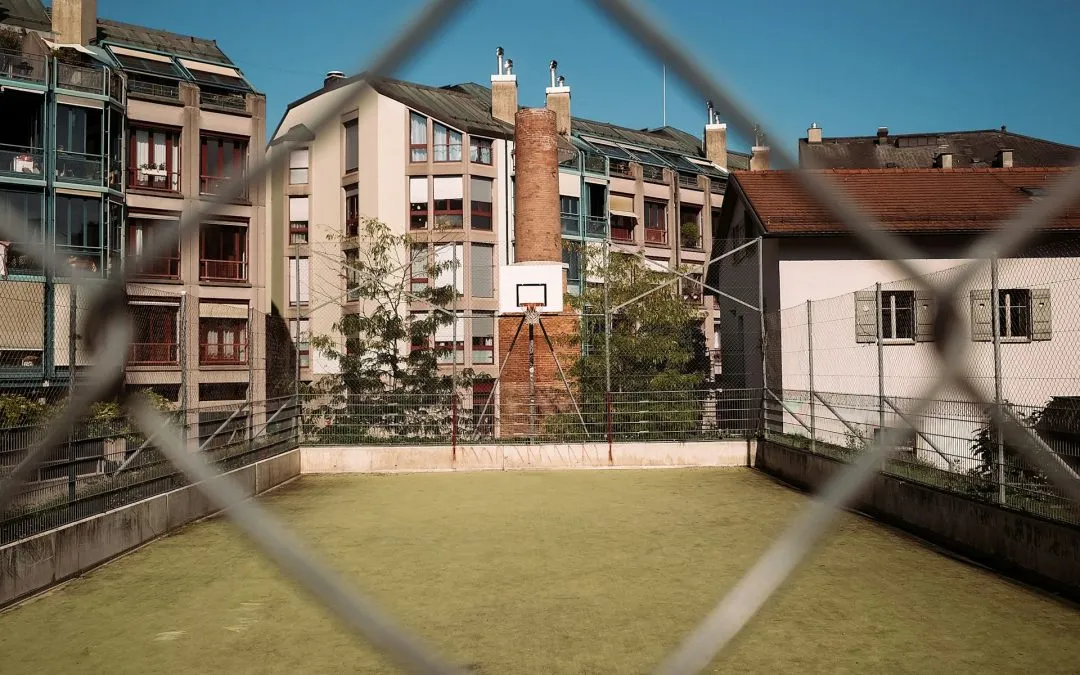
Editor’s Note: This post was written as a preview of an upcoming Supreme Court of Canada decision for the Fantasy Courts website and newsletter. Photo by Maxence Ambert on Unsplash.
⚖️ On Friday, November 21, 2025, the Supreme Court of Canada will release its decision in Dorsey v. Canada. The case asks a foundational question about liberty behind bars: when can prisoners use habeas corpus to challenge decisions that keep them in higher-security prisons?
🔍 Last Friday, November 14, 2025, the Supreme Court released two major impaired-driving rulings: R. v. Rousselle and R. v. Larocque. These decisions clarify what the Crown must prove to rely on the statutory presumption of accuracy for breathalyzer results. About 65% of Fantasy Courts players predicted the outcomes correctly!
🔮 Head over to Fantasy Courts to lock in your predictions for this week’s decision. Scroll down for details on this week’s case or a recap of last week’s judgment.
Case to Predict: Can Prisoners Use Habeas Corpus to Seek Lower Security?
Appeal by leave from Dorsey v. Canada (Attorney General), 2023 ONCA 843
What Happened?
Mr. Dorsey and Mr. Salah are federal inmates serving long sentences in medium-security institutions. In 2019, each applied for transfer to minimum security:
- Mr. Dorsey, a designated dangerous offender, was recommended for minimum security by his case management team, Manager of Assessment and Intervention, and Warden, but his transfer required approval from higher-level CSC officials. The Regional Deputy Commissioner classified him as a moderate public safety risk and denied the transfer.
- Mr. Salah received similar internal recommendations, but a newly assigned MAI assessed him as a moderate escape risk, leading the Warden to wrongly deny his transfer and instruct him to wait until two years before parole eligibility.
Both inmates applied for habeas corpus, arguing that denying their transfers unlawfully restricted their residual liberty — the limited liberty interests prisoners retain while incarcerated. The applications judge disagreed and held that a denial of reclassification is not a deprivation of residual liberty, since neither inmate experienced a further loss of liberty beyond their existing medium-security placement. The Ontario Court of Appeal dismissed the appeal.
What Was Argued at the SCC?
Appellants: Dorsey and Salah argued that habeas corpus must remain a flexible, expansive remedy. A refusal to reclassify can amount to a continuing deprivation of liberty under the third Dumas category. If the refusal is unlawful, it crystallizes the detention into an unlawful one. The grievance and judicial review processes are slow and ineffective. Habeas corpus is needed to prevent arbitrary decisions.
Respondent: The Crown argued that habeas corpus only applies when there is a reduction in residual liberty, such as segregation, special handling units, or involuntary transfers upward. Maintaining medium security is not a deprivation. Prisoners have no entitlement to minimum security. Other remedies (grievances and Federal Court judicial review) remain available.
What Else Should You Know Before Making a Prediction?
This case asks whether habeas corpus can be used to challenge administrative decisions that maintain the status quo. A ruling for the inmates could be seen to expand habeas corpus, allowing more direct challenges to CSC security classifications. A ruling for the Crown would reaffirm that habeas corpus only applies when conditions actually worsen. The Court of Appeal was split (2–1), with the dissent emphasizing that unlawful refusals can crystallize into deprivations of liberty.
The SCC has recently balanced habeas corpus flexibility with concerns about floodgates. I’m slightly leaning toward appeal dismissed, but it’s a close call given the liberty interests at play.
Previous Case Recap: Rousselle & Larocque
R. v. Rousselle, 2025 SCC 35
Held (8:1): Appeal dismissed.
- The Crown can rely solely on the certificate of the qualified breath technician to show the alcohol standard used in the calibration check was “certified by an analyst.” No separate analyst evidence is required.
- The Court emphasized Parliament’s purpose: streamlining impaired-driving prosecutions while allowing accused persons to challenge certificates if needed.
R. v. Larocque, 2025 SCC 36
Held (8:1): Appeal dismissed.
- The Crown does not need to prove the target value of the alcohol standard used in the calibration check. It must disclose the target value, but the qualified technician’s certificate stating the calibration check was within 10% is sufficient.
- The Court highlighted efficiency and consistency with the statutory scheme.
📊 About 65% of Fantasy Courts players predicted the two appeals correctly.
Thanks for reading and playing Fantasy Courts. If you liked today’s newsletter, we’d love for you to share it with a friend, or you can sign up to receive it as an email: https://mailchi.mp/37b20ffd0198/fantasycourts
-Tom Slade